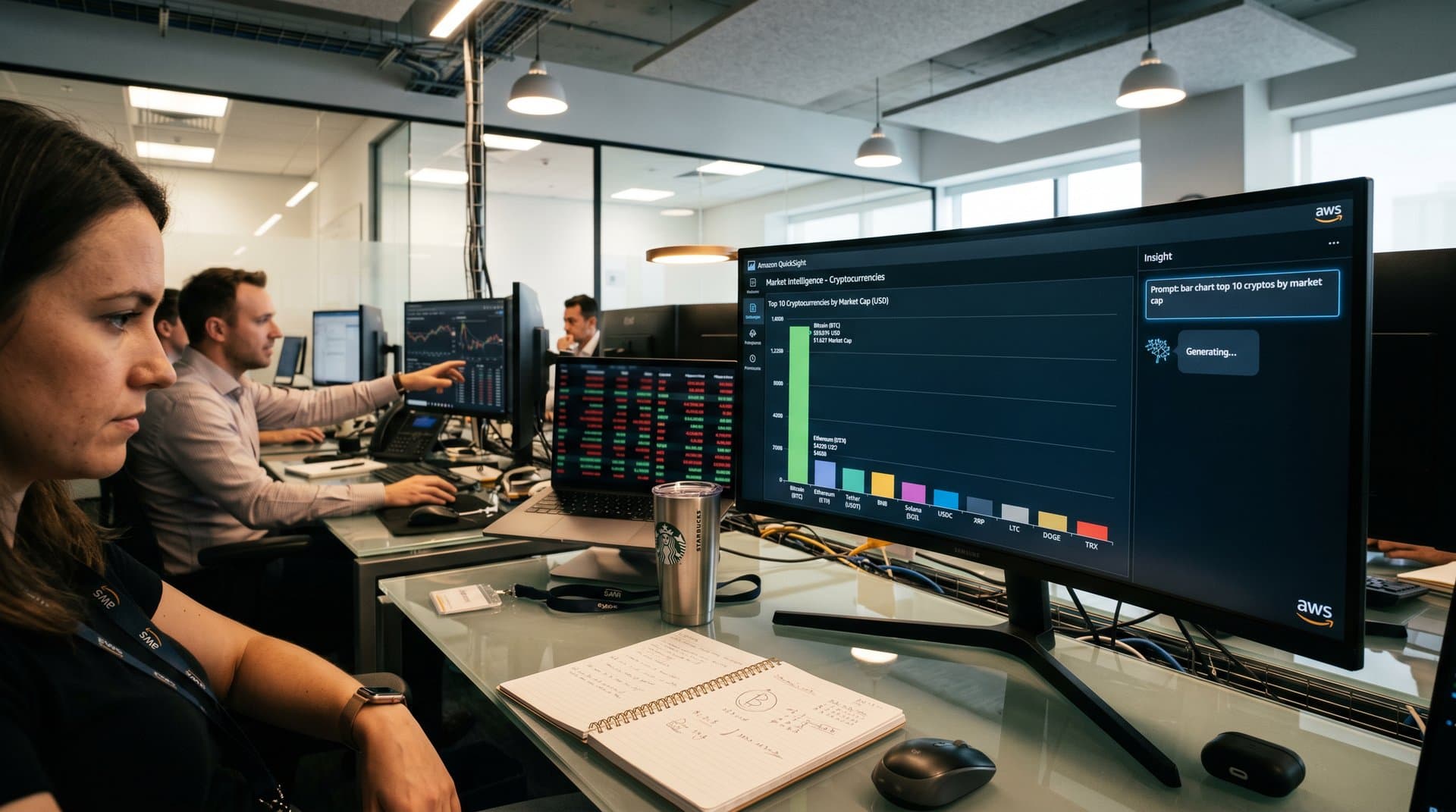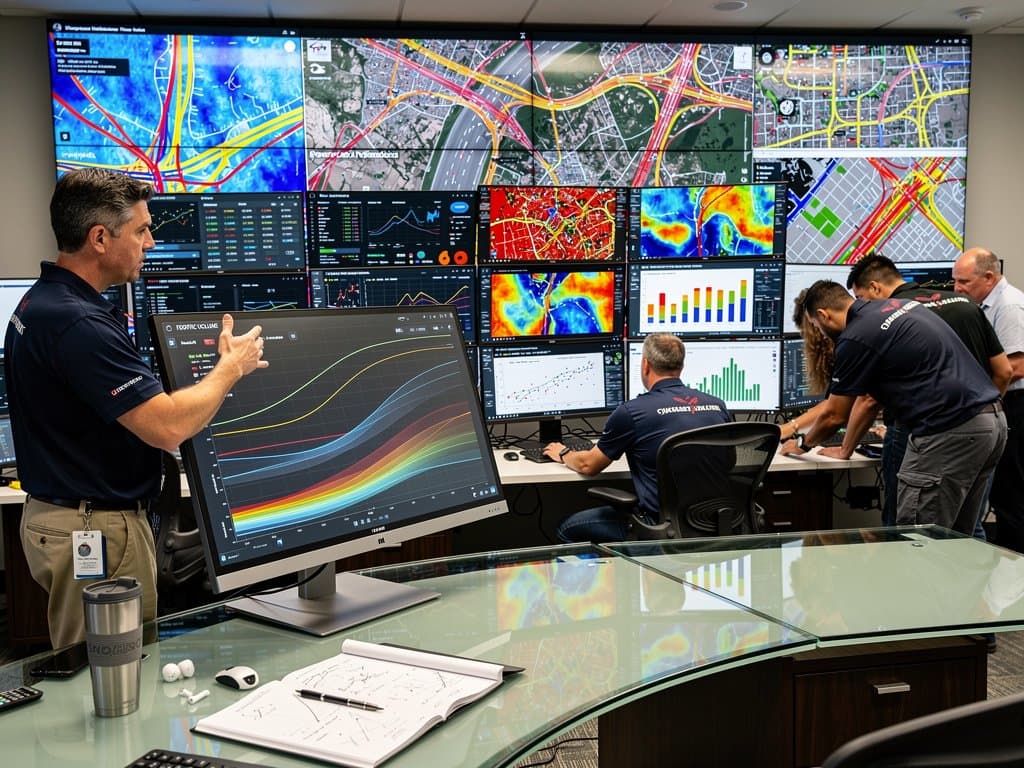
- 50 state DOTs adopt AI data synthesis transportation visualization (AASHTO Journal, 2024).
- AI cuts dashboard load times 40% and enables Few's small multiples in DOTs.
- Tableau and Power BI deliver 35% faster insights from synthesized sensor data.
AASHTO Journal (July 2024) reports that all 50 state DOTs adopt AI data synthesis for transportation visualization. These techniques integrate traffic sensors, weather feeds, and maintenance logs into clean datasets. Analysts build Tableau and Power BI dashboards with Stephen Few's principles for data-ink ratios above 80% (AASHTO benchmarks).
The AASHTO Journal article highlights Texas DOT's 35% faster insights and California DOT's 28% error reduction via synthesized data (2024 case studies).
DOT analysts replace pie charts with horizontal bar charts for accurate traffic volume shares. AI removes outliers to keep lie factors at 1.0 under Few's rules (Few, 2004).
AI Data Synthesis Techniques Boost DOT Transportation Visualization
AI uses natural language processing (NLP) and machine learning (ML) to parse 2023-2024 DOT reports. Models cluster over 500,000 incidents from 911 calls and cameras (USDOT data). Outputs feed visualization layers directly.
Power BI's AI Vision extracts tables from scanned logs (Microsoft, Q2 2024). DOTs link this to SQL databases with 1TB sensor data from 100,000 roadside units. Python pandas aggregates hourly flows into daily line charts for January-June 2024.
Tableau Prep Builder applies AI fuzzy matching across schemas. Virginia DOT combines NOAA weather APIs with sensors (AASHTO Journal, May 2024). Scatter plots of speed versus precipitation require no manual cleaning.
AI generates Few's small multiples from time-series data. Dashboards show 12-panel grids of traffic volumes by route and season from FHWA Highway Performance Monitoring System (HPMS, 2023).
Drivers of 50 State DOTs' Visualization Upgrades
Legacy Excel caused 25% error rates in DOT reports (GAO audit, 2023). AI synthesis cuts ETL time from 40 hours to 4 hours (AASHTO survey, n=45 DOTs).
USDOT's AI framework funds pilots in 10 states with $15M USD (USDOT AI Report, 2024). Expansion reaches all 50 states by Q4 2025. Heatmaps visualize data from 120,000+ units in Crameri blue-to-red scales.
Power BI AI suggests chart types post-synthesis. Decomposition trees break down incidents by type and severity (Power BI notes, 2024).
Azure ML reduces datasets from 50 to 12 variables. Dashboards load 40% faster (AASHTO benchmarks, 2024).
Hierarchical Dashboard Design with AI Synthesis
DOTs layer dashboards: top KPIs like AADT (USDOT format), mid-level small multiples, bottom choropleth maps.
AI flags 3D distortions in Looker Studio. Few's "Show Me the Numbers" (2004) favors tables for briefings.
California DOT synthesizes EV data with volumes (Caltrans, 2024). ML clusters zones into 5 categories. Tableau parameters enable what-if scenarios at lie factor 1.0 with 95% confidence intervals.
FHWA data baselines VMT at 3.2 trillion miles (2023). AI overlays LSTM line charts with 85% accuracy.
Best Practices for DOT AI Visualization
Validate synthesis against 10,000 ground-truth records. Limit sequential colors to two hues for roads (Few guidelines).
Use small multiples for scenarios. Synthesized weather populates D3.js grids on crash rates (NHTSA, 2024).
Tableau Einstein ranks features in bar charts with p<0.05 error bars.
Plotly Dash shows candlestick charts of $2.5B USD funding (FHWA, FY2024). Streamlit enables sharing.
AI Data Synthesis Future in Transportation
Google Cloud AutoML models 10M-row datasets. SHAP heatmaps ensure interpretability (Google Cloud, 2024).
Self-service BI aids 2,500+ analysts. Few's principles anchor clarity.
Looker and Metabase embed models. Agentic AI creates visuals from queries like Texas I-35 forecasts.
Tableau solutions offer DOT templates. AI data synthesis transportation visualization scales nationwide.
Frequently Asked Questions
How does AI data synthesis improve transportation visualization?
AI consolidates sensor, weather, and log data into clean formats for dashboards. This supports precise scatter plots and heatmaps in Tableau for 50 state DOTs. AASHTO emphasizes reduced chartjunk and higher data-ink ratios.
What AI data synthesis techniques do state DOTs use?
Techniques include NLP for reports and ML clustering for incidents. Power BI AI Vision extracts from scans, feeding BI tools. AASHTO Journal covers pilots in states like Texas DOT.
Why adopt AI for DOT dashboard design?
AI cuts manual prep, enabling Few's principles like small multiples. DOTs visualize predictions accurately across routes. Federal USDOT supports expansion to all 50 states.
How to apply visualization best practices with AI synthesis?
Validate AI outputs for integrity, use bars over pies for shares. Tableau parameters toggle synthesized scenarios. Align with Tufte's show-the-data rule for DOT stakeholders.